※プロモーションを含むことがあります
This review is written from a Japanese perspective and includes cultural insights for international viewers. The opening of the anime feels deeply symbolic, filled with subtle hints and foreshadowing.
Want to watch or read?
Watch on Amazon
Read the Manga Vol.1 (Amazon)
Potential OP Symbolism
Early in the OP, when the title appears, a fish-like creature is shown swimming.
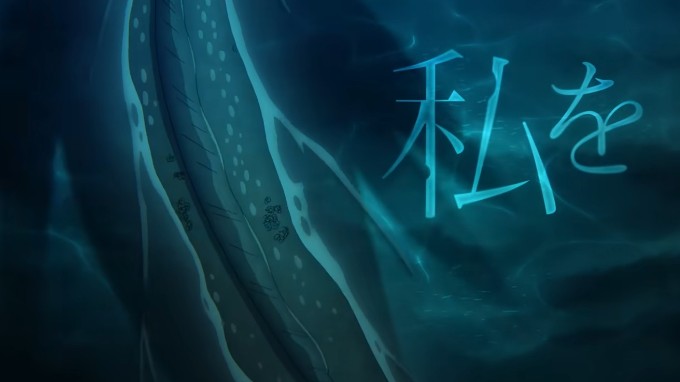
Its shape is close to Shiori’s original yokai(monster) form seen in Episode 1, so it might represent her. We also see young Hinako reaching out toward three figures who appear to be her parents and older brother.
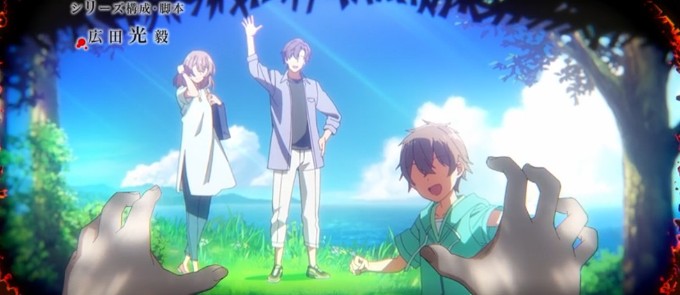
According to the official synopsis, Hinako lives alone in isolation, so these three figures are assumed to be her deceased family. The next cut shows ringo-ame, a traditional Japanese festival treat.
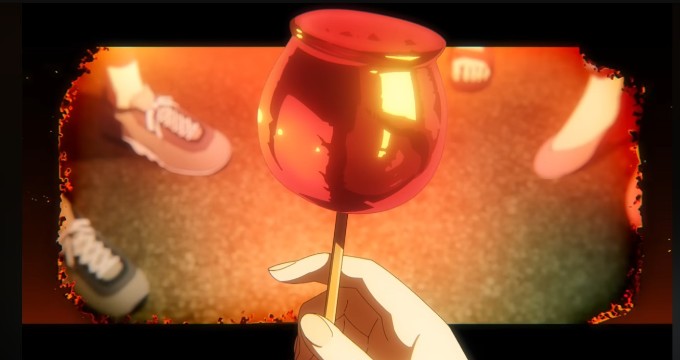
“Ringo” means apple, and “ame” means candy. Ringo-ame is a whole apple on a stick coated in a glossy candy shell—something you’d find at Japanese festival stalls. Its appearance here likely foreshadows a story element to come. The white seashell that appears afterward also feels like a deliberate hint.

Character Motifs and Flower Meanings
Various other objects shown throughout the OP will probably connect to future plot developments, but the most fascinating scene in This Monster Wants to Eat Me is the sequence focusing on the three characters.
In particular, the three characters shown near the end and the flowers surrounding them contain layers of meaning that are especially intriguing for a Japanese audience. When flowers appear in Japanese anime or manga illustrations, fans here almost always look up their hanakotoba—the language of flowers. That’s how important these motifs are.
Shiori’s cut features sakura (cherry blossoms).
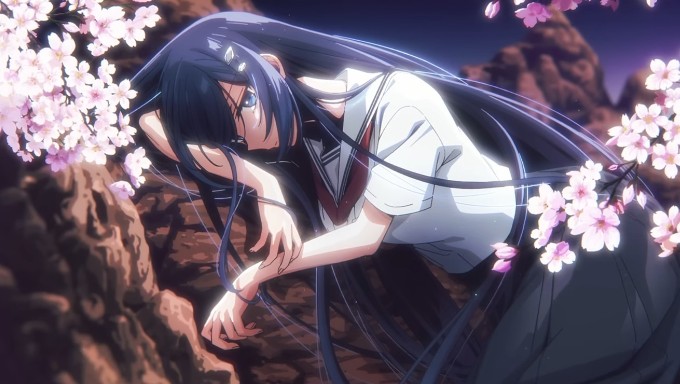
Flower meanings differ by country, but in Japan, sakura symbolizes spiritual beauty, feminine grace, and purity. Based on Episode 1, Shiori initially comes across as a mysterious, even dangerous monster, so these meanings feel surprisingly gentle. Perhaps future episodes will reveal a side of Shiori that aligns with these symbols. The next cut, featuring Miko, shows asagao (morning glories).
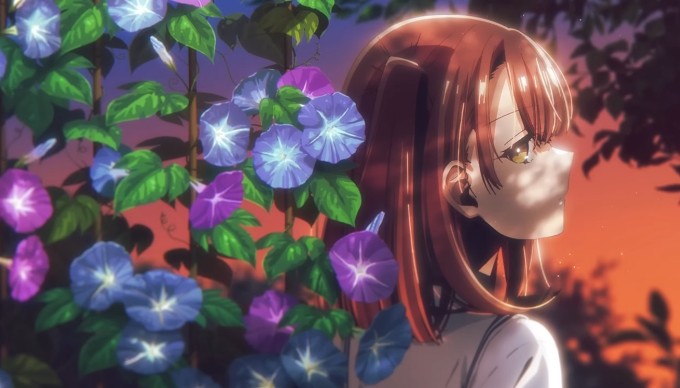
Morning glories represent gentle affection, love, bonds, and “a fresh tomorrow.” These meanings fit Miko’s bright and refreshing personality seen in Episode 1. Hinako’s cut shows ajisai (hydrangeas), associated with family harmony, fickleness, infidelity, patience, and impermanence.
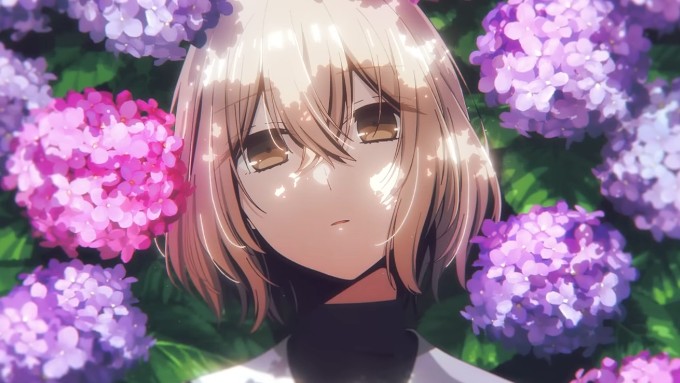
The meaning also changes with color. Pink hydrangeas symbolize a lively woman and strong affection. On the left side of the shot, there is one notably pink bloom—this might hint at Hinako’s true nature. The rest of the hydrangeas appear purple. Depending on region, people perceive the shade differently, but to a Japanese viewer, they look distinctly purple. Purple hydrangeas carry more ominous meanings: coldness, unfaithfulness, and transience.
Of all three characters, Hinako’s flower feels the most unsettling from a hanakotoba standpoint. She gives off the impression of a protagonist with something dangerous beneath the surface. Another detail worth noting: both Miko’s morning glories and Hinako’s hydrangeas can be toxic plants. And for all three characters, the associated flower meanings tie back to themes of love.
As the story progresses, it will be fascinating to see how each girl’s expression of love is explored. Hinako’s hydrangeas in particular—linked to fickleness and shifting emotions—suggest that her feelings may undergo significant changes. Watching how her heart evolves alongside the plot will be one of the most exciting parts of the anime.

